Local Wood Chips vs. Imported Bark: Bay Area Soil Health | Ecomulch

October 14, 2026

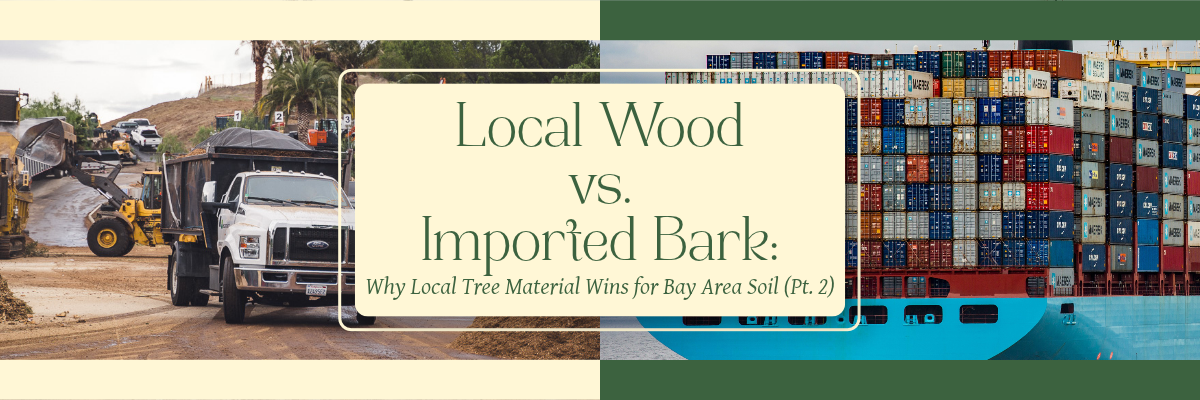
Local Wood vs. Imported Bark: Why Local Tree Material Wins for Bay Area Soil (Part 2)

When landscaping your yard, choosing between locally recycled tree material and mass-produced decorative bark shipped in from elsewhere or out-of-state might seem like a simple cosmetic choice. However, keeping your mulch local makes a world of difference for your garden's health and ecosystem.

In Part 2 of our series, Heather Hamilton, owner and founder of Ecomulch, explains why locally sourced tree material outperforms imported bark for Northern California landscapes.

The Verdict: Always Keep It Local

When asked if locally sourced tree material is better for Bay Area soil health than imported bark shipped from elsewhere, Heather’s answer is definitive:

"Yes, it’s always best to keep your materials local—it’s significantly better for the environment and prevents the spread of invasive pests."

— Heather Hamilton

Here is why this principle matters so much for your soil, trees, and regional landscape:

1. Preventing the Spread of Invasive Pests & Tree Diseases

Shipping raw wood products, tree bark, and wood waste across long distances—or across state lines—is one of the primary vectors for introducing devastating pests and plant pathogens into new environments.

  • Invasive Insects: Imported wood waste can carry invasive pests like the Goldspotted Oak Borer, Polyphagous Shot Hole Borer, or invasive bark beetles into local communities.
  • Fungal Pathogens: Fungal spores that cause tree diseases like Sudden Oak Death (Phytophthora ramorum) or pitch canker can hitch a ride in untreated bark shipped from infected forests.
  • Protecting Regional Trees: By processing and applying wood material within the same local region where it grew, local suppliers prevent exotic pests and diseases from colonizing healthy Contra Costa County canopy and native Bay Area forests.

2. Environmental Impact & Lower Carbon Footprint

Mass-produced decorative bark sold in large retail channels often originates hundreds of miles away in Pacific Northwest or Sierra forestry operations.

  • Fuel & Transport Emissions: Hauling heavy, bulk bark products across long distances requires fleet transport on interstate highways, burning huge amounts of diesel fuel and generating heavy carbon emissions.
  • True Circular Economy: Using locally chipped tree material from local tree services (like Hamilton Tree Service) creates a closed-loop system in the East Bay. Material removed from local urban trees goes directly back into feeding local soil, cutting transport distances down to miles instead of hundreds of miles.

3. Natural Compatibility with Bay Area Soil Biology

Local trees grow in local soil conditions—meaning their wood, leaves, and bark contain the exact balance of organic matter and trace minerals that local soil micro-organisms thrive on.

  • Feeds Beneficial Soil Life: As local arborist chips naturally break down, they release nitrogen, carbon, and micronutrients that nourish local mycorrhizal fungi, earthworms, and soil microbes.
  • Moisture Balance for Local Clay & Loam: Local tree chips hold up exceptionally well against hot Bay Area summers, slowing water evaporation and insulating root zones against heat without suffocating roots or souring the soil.
Back to Posts