
Your Cart


Product title goes here
$19.95
Thank you! Your submission has been received!
Oops! Something went wrong while submitting the form.
No items found.
Note: Each item ships as its own delivery. Call us about split loads.
October 5, 2026
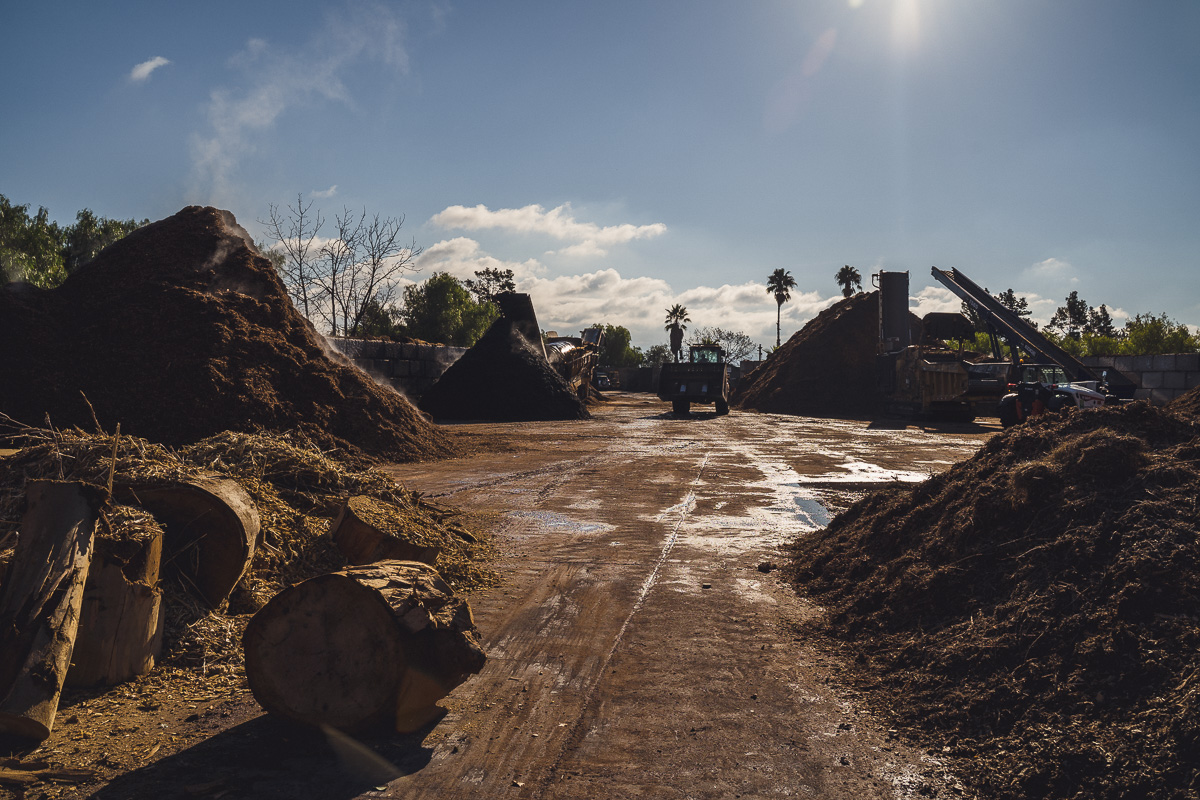
When garden columnist Joan Morris set out to explore true environmental stewardship in Northern California, she turned her spotlight on a local Martinez company revolutionizing how the East Bay handles tree material: Ecomulch.
In her Mercury News feature titled "A Garden View: Sustaining Sustainability," Morris highlighted what makes Ecomulch fundamentally different from big-box suppliers and showed how founders Heather and Grant Hamilton built a full-circle, zero-waste business that turns local tree trimmings, prunings, and removals into premium landscape products.
Many homeowners buy bagged wood chips without realizing where they come from. Mass-produced bagged mulches sold at large retail chains are often shipped hundreds of miles, burning fossil fuels along the way. Worse, cheap wood waste can contain ground-up pallets, construction debris, nails, or chemical dyes.
As Morris detailed in her column, Ecomulch takes a radically different approach:
"We’re taking local urban wood that would otherwise end up in landfills or get wasted, and turning it into a high-quality resource that feeds local soil biology right back here in the Bay Area." — Ecomulch Team
The Mercury News spotlighted a full-circle community recycling network. Beyond converting clean tree trimmings into high-grade organic mulch, the Hamilton family reuses every part of the harvested trees:
This closed-loop system keeps resources circulating locally, reducing transport emissions while enriching Contra Costa County soil.
Using raw, locally processed arborist mulch does far more than make your landscape beds look clean. Bay Area soils—ranging from heavy clay in valley areas to sandy loam near the hills—benefit immensely from clean organic material:
Over a decade after The Mercury News featured Ecomulch's commitment to zero-waste landscaping, that mission remains identical today. Whether you’re converting a thirsty lawn into a drought-tolerant native garden or refreshing garden beds before summer heat hits, using locally recycled mulch keeps your carbon footprint small and your soil healthy.
Article can be found here: http://www.mercurynews.com/joan-morris/ci_20079905